If you think you may be affected or would like to discuss your position, start the conversation with our property tax team.
Annual Tax on Enveloped Dwellings: What you need to know for 2026/27
16 March 2026
The Annual Tax on Enveloped Dwellings (ATED) filing window for the 2026/27 tax year is fast approaching and now is a good time to ensure you meet the upcoming deadlines.
What is Annual Tax on Enveloped Dwellings (ATED)?
Annual Tax on Enveloped Dwellings (ATED) is a yearly tax paid by companies and certain non‑individuals that own UK residential property valued above a set threshold. It’s designed to ensure that high‑value homes held through corporate structures contribute their fair share to the tax system.
Who does this apply to?
If your company or investment vehicle holds residential property that falls within these criteria, you may be required to submit an ATED return each year and pay an associated annual charge. The amount due, and whether you can claim any reliefs, will depend on your specific circumstances.
This guide breaks down the essentials: who ATED applies to, how the charges work, and the practical steps you may need to take to remain compliant.
Key deadlines for 2026/27
For the 2026/27 tax year, ATED returns must be submitted between 1 April 2026 and 30 April 2026. This is a relatively short filing window, so it’s important to have your information prepared well in advance.
Missing the deadline can lead to late-filing penalties and interest, even if no tax is ultimately payable, so early preparation is important.
If your property qualifies for an ATED relief, you still need to submit a return to claim it. HMRC does not apply reliefs automatically.
Early preparation not only helps you stay compliant but also gives you time to confirm valuations, assess available reliefs and gather any supporting documentation.
Who needs to file an ATED return?
You may be required to file an ATED return if:
- you own a UK residential property valued at £500,000 or more, and
- the property is held by a company, a partnership with a corporate member, or another non‑natural person.
The property’s value is based on the most recent valuation date set by HMRC. If you are unsure whether your property falls within the £500,000 threshold, or if a historic valuation is still valid, our team can help you review and confirm its position.
Annual charges
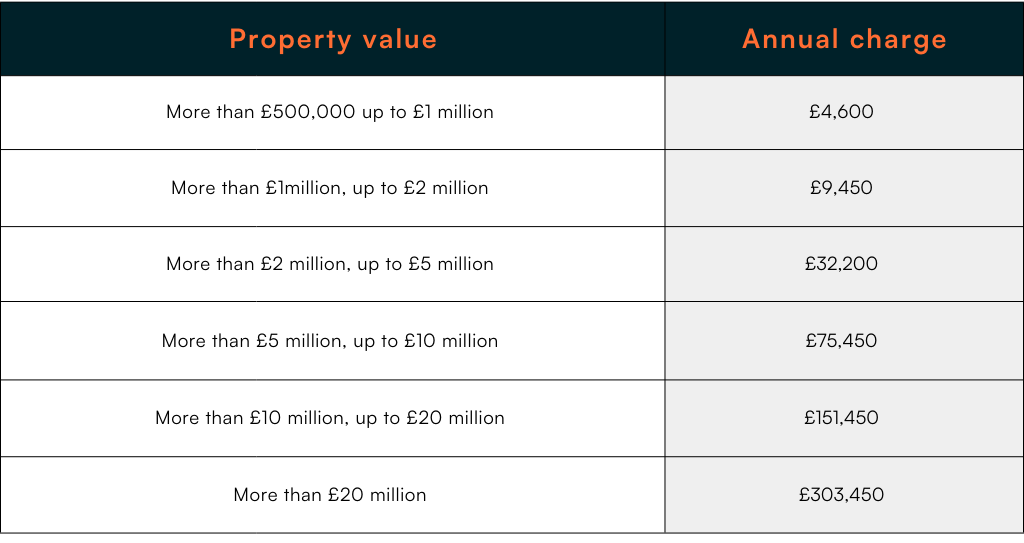
ATED charges are set by HMRC and increase each year in line with inflation.
Chargeable amounts for 1 April 2026 to 31 March 2027:
Reliefs that may reduce your charge
There are several reliefs that exist which may reduce or remove the ATED liability. Common examples include:
- property rental businesses
- property development trades
- property trading businesses
- properties open to the public
- charitable use
Even if you qualify for relief, you still need to file a Relief Declaration Return to ensure compliance.
Reporting throughout the year
In addition to the main annual return, further reporting obligations can arise:
- If you acquire a property
- If you build a new residential property
- If you significantly develop an existing property
If the value reaches £500,000 or more, an ATED return may be required within 30 days of the relevant event (or up to 90 days in specific circumstances).
Early communication is essential, as these shorter deadlines can easily be missed.
How Affinia can help
Listening to what matters most to you is at the heart of how we work. We tailor our advice to ensure you stay compliant, avoid penalties and make confident decisions.
Our property tax specialists can:
- assess whether ATED applies to your property
- prepare and submit your annual or in‑year returns
- review relief entitlements
- support you with valuations and planning
Championing your business means helping you navigate tomorrow, together.
Meet our Property Tax experts


Previous slide
Next slide